# Coding with Karthik: Perceptron Learning Algorithm in C
Date: 2024-05-25
Tags: C Programming Language, Perceptron Learning
[Coding with Karthik: Visualizing the Perceptron Learning Algorithm](/2024/01/05/visualizing-the-perceptron-learning-algorithm/)
Remember that blog post? ^
Well, I wanted to do the same thing but in the **C Programming Language**.
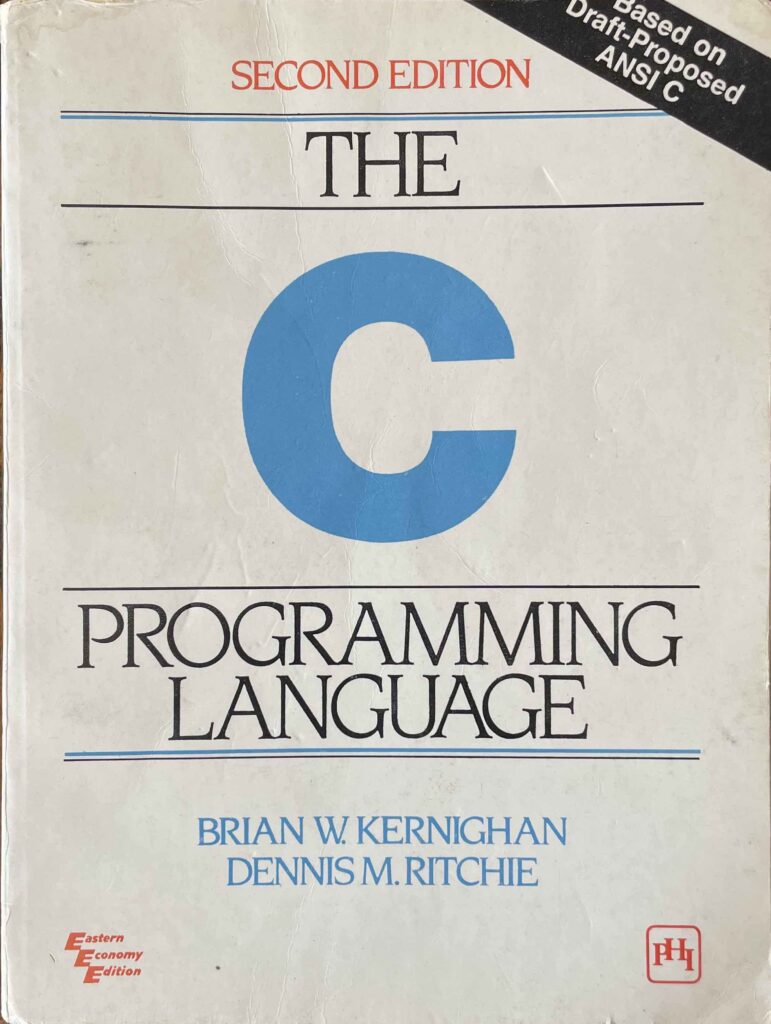 To write the perceptron learning algorithm in C, I had to let go of my comforts. File reading became a task of its own. I spent a couple hours trying to figure out pointers. Hopefully I don’t have memory leaks – I think `free()`‘d whenever I `malloc()`‘d. 😀
Below is the code. Enjoy!
```c
/*
* LOGIC:
* 1. Start with random B, W1, W2,
* 2. get_misclassified(B, W1, W2)
* 3. for sample in misclassified:
* get values x1, x2, y (y is binary)
* if y == 0: y = -1
* B = B + y * 1 * LR
* W1 = W1 + y * x1 * LR
* W2 = W2 + y * x2 * LR
*/
#include
#include
#include
#include
#include
#define MAX_LINE_LENGTH 100
typedef struct datapoint {
double x1;
double x2;
bool y;
} datapoint;
const double LR = 1; // learning rate
const int STOP_ITER = 10000; // maximum number of epochs run
int dataset_size;
// generate random decimal between -1 and 1
double gen_random_neg1_1() {
double r = -1 + 2 * ((float)rand()) / RAND_MAX;
return r;
}
bool gen_true_false() {
int i = rand() % 2;
if (i == 1) {
return true;
} else {
return false;
}
}
datapoint *get_misclassified(datapoint *dataset, int dataset_len, double b, double w1, double w2, int *pmisclassified_count) {
datapoint *misclassified_points;
misclassified_points =
malloc(dataset_len * sizeof(datapoint)); // maximum the list can go
*pmisclassified_count = 0;
for (int i = 0; i < dataset_len; i++) {
datapoint sample = dataset[i];
double pred = b + w1 * sample.x1 + w2 * sample.x2;
if (pred > 0 != sample.y) {
misclassified_points[*pmisclassified_count] = sample;
(*pmisclassified_count)++;
}
}
return misclassified_points;
}
int get_file_len(char *filename) {
FILE *pfile = fopen(filename, "r");
if (pfile == NULL) {
printf("No file %s", filename);
exit(1);
}
int lines = 0;
while (!feof(pfile)) {
int ch = fgetc(pfile);
if (ch == '\n') {
lines++;
}
}
return lines;
}
datapoint *get_dataset(char *filename) {
FILE *pfile = fopen(filename, "r");
if (pfile == NULL) {
printf("No file %s", filename);
return 0;
}
dataset_size = get_file_len(filename);
int count = 0;
datapoint *dataset;
dataset = malloc(dataset_size * sizeof(datapoint));
char line[MAX_LINE_LENGTH];
while (fgets(line, MAX_LINE_LENGTH, pfile) != NULL) {
line[strcspn(line, "\n")] = '\0'; // strip newline
char *token = strtok(line, ",");
if (token != NULL) {
dataset[count].x1 = atof(token);
token = strtok(NULL, ",");
if (token != NULL) {
dataset[count].x2 = atof(token);
token = strtok(NULL, ",");
if (token != NULL) {
dataset[count].y = atoi(token);
count++;
}
}
}
}
fclose(pfile);
return dataset;
}
int main(int argc, char *argv[]) {
srand(time(NULL)); // Initialization, should only be called once.
double b = gen_random_neg1_1();
double w1 = gen_random_neg1_1();
double w2 = gen_random_neg1_1();
datapoint *dataset = get_dataset(argv[1]);
// get array of misclassified points and the length of the array
int misclassified_count;
datapoint *misclassified =
get_misclassified(dataset, dataset_size, b, w1, w2, &misclassified_count);
int count = 0; // count number of epochs
while (misclassified_count > 0) {
for (int i = 0; i < misclassified_count; i++) {
// get sample and update weights
datapoint sample = misclassified[i];
int multiplier = sample.y ? 1 : -1;
b = b + multiplier * LR;
w1 = w1 + multiplier * sample.x1 * LR;
w2 = w2 + multiplier * sample.x2 * LR;
}
free(misclassified);
misclassified = get_misclassified(dataset, dataset_size, b, w1, w2, &misclassified_count);
count++;
if (count > STOP_ITER) {
break;
}
}
free(dataset);
free(misclassified);
printf("FINAL VALUES\n");
printf("b: %f\n", b);
printf("w1: %f\n", w1);
printf("w2: %f\n", w2);
printf("Misclassified count %d", misclassified_count);
printf("\n\n");
return 0;
}
```
To write the perceptron learning algorithm in C, I had to let go of my comforts. File reading became a task of its own. I spent a couple hours trying to figure out pointers. Hopefully I don’t have memory leaks – I think `free()`‘d whenever I `malloc()`‘d. 😀
Below is the code. Enjoy!
```c
/*
* LOGIC:
* 1. Start with random B, W1, W2,
* 2. get_misclassified(B, W1, W2)
* 3. for sample in misclassified:
* get values x1, x2, y (y is binary)
* if y == 0: y = -1
* B = B + y * 1 * LR
* W1 = W1 + y * x1 * LR
* W2 = W2 + y * x2 * LR
*/
#include
#include
#include
#include
#include
#define MAX_LINE_LENGTH 100
typedef struct datapoint {
double x1;
double x2;
bool y;
} datapoint;
const double LR = 1; // learning rate
const int STOP_ITER = 10000; // maximum number of epochs run
int dataset_size;
// generate random decimal between -1 and 1
double gen_random_neg1_1() {
double r = -1 + 2 * ((float)rand()) / RAND_MAX;
return r;
}
bool gen_true_false() {
int i = rand() % 2;
if (i == 1) {
return true;
} else {
return false;
}
}
datapoint *get_misclassified(datapoint *dataset, int dataset_len, double b, double w1, double w2, int *pmisclassified_count) {
datapoint *misclassified_points;
misclassified_points =
malloc(dataset_len * sizeof(datapoint)); // maximum the list can go
*pmisclassified_count = 0;
for (int i = 0; i < dataset_len; i++) {
datapoint sample = dataset[i];
double pred = b + w1 * sample.x1 + w2 * sample.x2;
if (pred > 0 != sample.y) {
misclassified_points[*pmisclassified_count] = sample;
(*pmisclassified_count)++;
}
}
return misclassified_points;
}
int get_file_len(char *filename) {
FILE *pfile = fopen(filename, "r");
if (pfile == NULL) {
printf("No file %s", filename);
exit(1);
}
int lines = 0;
while (!feof(pfile)) {
int ch = fgetc(pfile);
if (ch == '\n') {
lines++;
}
}
return lines;
}
datapoint *get_dataset(char *filename) {
FILE *pfile = fopen(filename, "r");
if (pfile == NULL) {
printf("No file %s", filename);
return 0;
}
dataset_size = get_file_len(filename);
int count = 0;
datapoint *dataset;
dataset = malloc(dataset_size * sizeof(datapoint));
char line[MAX_LINE_LENGTH];
while (fgets(line, MAX_LINE_LENGTH, pfile) != NULL) {
line[strcspn(line, "\n")] = '\0'; // strip newline
char *token = strtok(line, ",");
if (token != NULL) {
dataset[count].x1 = atof(token);
token = strtok(NULL, ",");
if (token != NULL) {
dataset[count].x2 = atof(token);
token = strtok(NULL, ",");
if (token != NULL) {
dataset[count].y = atoi(token);
count++;
}
}
}
}
fclose(pfile);
return dataset;
}
int main(int argc, char *argv[]) {
srand(time(NULL)); // Initialization, should only be called once.
double b = gen_random_neg1_1();
double w1 = gen_random_neg1_1();
double w2 = gen_random_neg1_1();
datapoint *dataset = get_dataset(argv[1]);
// get array of misclassified points and the length of the array
int misclassified_count;
datapoint *misclassified =
get_misclassified(dataset, dataset_size, b, w1, w2, &misclassified_count);
int count = 0; // count number of epochs
while (misclassified_count > 0) {
for (int i = 0; i < misclassified_count; i++) {
// get sample and update weights
datapoint sample = misclassified[i];
int multiplier = sample.y ? 1 : -1;
b = b + multiplier * LR;
w1 = w1 + multiplier * sample.x1 * LR;
w2 = w2 + multiplier * sample.x2 * LR;
}
free(misclassified);
misclassified = get_misclassified(dataset, dataset_size, b, w1, w2, &misclassified_count);
count++;
if (count > STOP_ITER) {
break;
}
}
free(dataset);
free(misclassified);
printf("FINAL VALUES\n");
printf("b: %f\n", b);
printf("w1: %f\n", w1);
printf("w2: %f\n", w2);
printf("Misclassified count %d", misclassified_count);
printf("\n\n");
return 0;
}
```